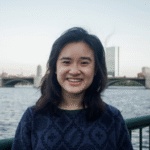
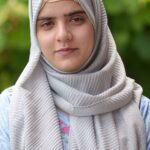
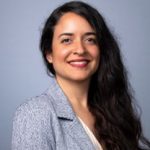
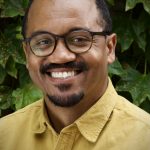
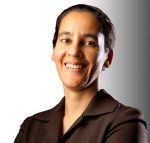
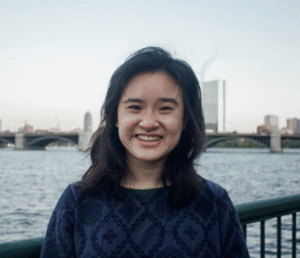
Olivia is a PhD student in Urban and Regional Planning at UB’s School of Architecture and Planning and a Presidential Fellow. Originally from Ghana, she earned her Master’s degree in Urban Planning from Minnesota State University, a Bachelor’s degree in Human Settlement Planning from Kwame Nkrumah University of Science and Technology, and a Graduate Certificate in GIS. Before coming to UB, she worked as the Community Development Coordinator for the City of Eagle Lake, Minnesota. Olivia is passionate about urban food systems and studies how land use policies can restrict urban agriculture. She also explores the ways food insecurity creates cognitive overload, influences decision-making, and leads to tunneling. At UB’s Food Lab, she is researching how food insecurity affects cognitive functioning on Buffalo’s East Side. In her spare time, she enjoys connecting with her family in Ghana and going to the gym.
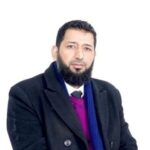
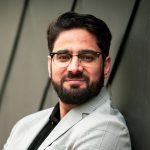
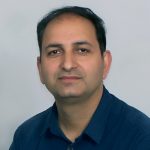
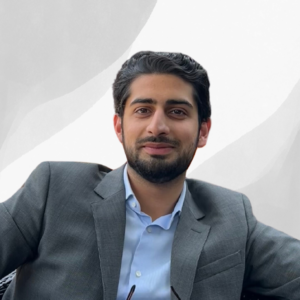 Mohammad Khurram Qureshi is a passionate advocate for civil, political, and socio-economic rights. He is driven by the conviction that law is a powerful tool for fostering justice and equality. As a licensed attorney from Kashmir, Khurram has dedicated his career to legal aid and social litigation, beginning his advocacy journey during law school. His commitment to human rights and public accountability has seen him collaborate with prominent organizations such as the J&K Right to Information Movement, focused on social justice.
 Khurram is the serving President of the Young Lawyers Forum, a non-profit legal organization dedicated to promoting legal awareness and social advocacy in Kashmir. He holds an integrated Bachelor in Arts and Law degree from the Central University of Kashmir. During his law school tenure, he demonstrated exceptional leadership as the Vice President of the Law Society. He is an admitted LL.M. candidate at the University of Wisconsin Law School and will begin his studies there in fall 2024. Khurram’s unwavering dedication to social advocacy continues to inspire his work, making him a formidable force in the pursuit of justice. In his free time, he likes to go hiking, camping, and kayaking.
Research Affiliates are outstanding team members who collaborate with us remotely on specific research projects.
- Radhika Kumar, MPlanning (India)
- Rosie DeVito, MPH (USA)
- Joy Resor, MUP (USA)
- Midhat Fayaz, Geo-Informatics Doctoral Candidate ’20 (India)
- Athar Parvaiz, Independent Journalist (Kashmir)
- Cassandra Granville, 26th Congressional Hunger Fellow
- Megan Smith, 26th Congressional Hunger Fellow
- Zhu Zin, PhD Geography
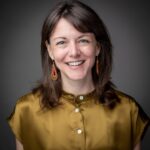
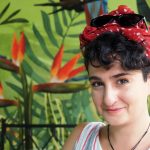
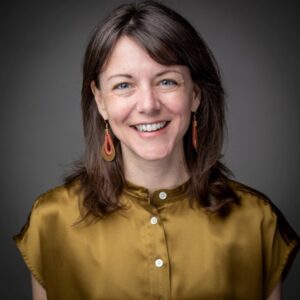
Jane Dai (she/her) draws from multiple disciplines to understand how food systems—shaped by policy, systems, and environments—structure the environments where communities pursue health and well-being. She strives to approach research with a storytelling lens by applying mixed methods to an expansive definition of “data” that includes numbers, narratives, maps, and media. Her work and practice at the intersection of public health, urban planning, and public policy aims to leverage her role as a researcher to translate data and evaluation into equitable, affirming, and liberative strategies for community flourishing.
Jane’s research has focused on exploring cascading effects of racial capitalism in food systems and population health systems. She is particularly interested in how gentrification—alongside other processes related to uneven community development—influences where, when, and how people access food in urban and suburban contexts. Other longtime interests include commercial determinants of health, food decision-making contexts, and big data for public health nutrition. As a full-time human, Jane also enjoys spending her time outside or doing “analog” activities. You can find her dog-spotting on runs, drinking tea and reading, tinkering with sourdough pastries, puzzling, or convincing the neighborhood cat to accept chin scritches.
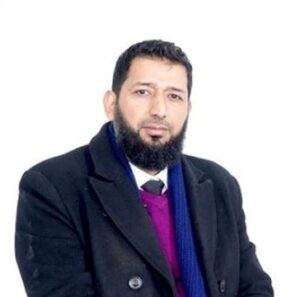
Khalid Masoodi is an Associate Professor of Biotechnology at SKUAST-Kashmir. Dr. Masoodi holds both a Master’s and PhD in Biotechnology with over 10 granted patents, more than 100 Publications and a strong focus on translational research and taking discoveries from the lab to real-world impact. His work spans nutraceutical discovery, cancer research, and the development of solutions that directly benefit people and strengthen indigenous food systems. Alongside his research, he is deeply passionate about teaching and mentoring students, guiding the next generation of scientists and innovators. His research bridges fundamental and translational science, taking discoveries from the lab to people through nutraceuticals, designer foods, and cancer therapeutics, and his work is deeply focused on cancer research (especially prostate cancer), medicinal plants, and stress biology in crops. He has been awarded many International (Journal Award Endocrinology, Travel Award-SBUR and National Awards (Early Career Research Award by ANRF, DST, Govt of India).
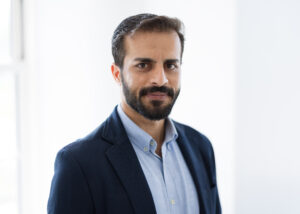
Mohsin is a Fulbright scholar pursuing a doctorate in urban and regional planning at the University at Buffalo. An international scholar from Pakistan, Mohsin began his doctoral work in the US in 2022 and joined the UB Food Lab in 2025. His research interests include climate change and mitigation, and the disparate impact of urban heat on varied groups of people.
At the Food Lab, Mohsin leads spatial and quantitative data management and analyses across multiple projects, including the national Data Justice for Food Justice project as well as more local projects focused on documenting disparities in the retail food environment in Erie County. Mohsin brings considerable training and work experience to his work in the Food Lab. Mohsin comes to the UB Food Lab with prior graduate degree in remote sensing and geographic information systems and work experience as a GIS professional with the World Wide Fund for Nature (WWF) in Pakistan. In Pakistan he also taught GIS-related courses to undergraduate and graduate classes at a public university.
In his leisure time, Mohsin enjoys playing squash, badminton, and chess. He also likes hiking, kayaking, cycling, and reading.
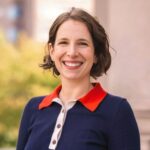
Molly Riordan is a food systems planning practitioner who pursues equitable regional approaches for building environmentally and socially responsible supply chains. For the last decade, she has explored how large demand centers of food, like cities and anchor institutions, can be levers for food systems transformation.
Molly is the co-author of The Promise of Urban Agriculture: a National Study of Commercial Farming in Urban Areas (2019), a groundbreaking report that now includes a professional development course for planners offered through the Cornell Small Farms Program. She is the current chair of the American Planning Association Food Systems Division, and co-founder of the nonprofit Philly Cooks for Philly, an initiative to build a central kitchen for Philadelphia food programs. Most recently, Molly has also acted as program director at the Center for Good Food Purchasing, which supports large institutions to purchase more values-based foods.
A Western New York native, Molly is returning to Buffalo to pursue a PhD in Urban and Regional Planning, with an interest in resident-led resource and data management for climate change resilience. She earned her master’s in regional planning at Cornell University, and her bachelor’s degree at Ithaca College.
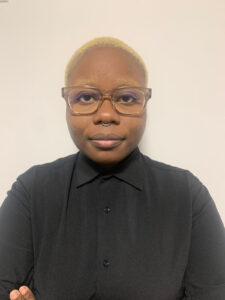
Sid Clarke is graduate of the Master of Urban Planning program at the University at Buffalo. Born and raised in Brooklyn, NY, they were first introduced to urban agriculture in high school during an internship with the City Parks Foundation, where they spent eight months working in a community garden. They graduated with a Bachelor’s in Anthropology from the City University of New York- Brooklyn College, where they conducted their senior ethnographic research project on food access inequities and environmental racism in predominantly Black communities in New York City and Washington DC. Their interests within planning include food systems, climate justice, and sustainable urban design. They hope to use green urban design to advocate for sustainable infrastructure that supports the health and autonomy of people and the planet, and to endorse community focused equitable urban agriculture and nontraditional food retail to address the systemic inequities that communities of color face in the food system. In their free time, Sid enjoys hiking, pottery and crocheting to unwind.
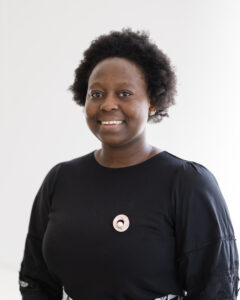
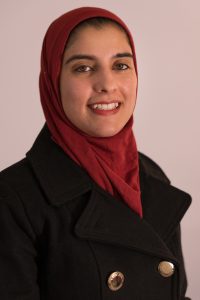 Maheen Akram